
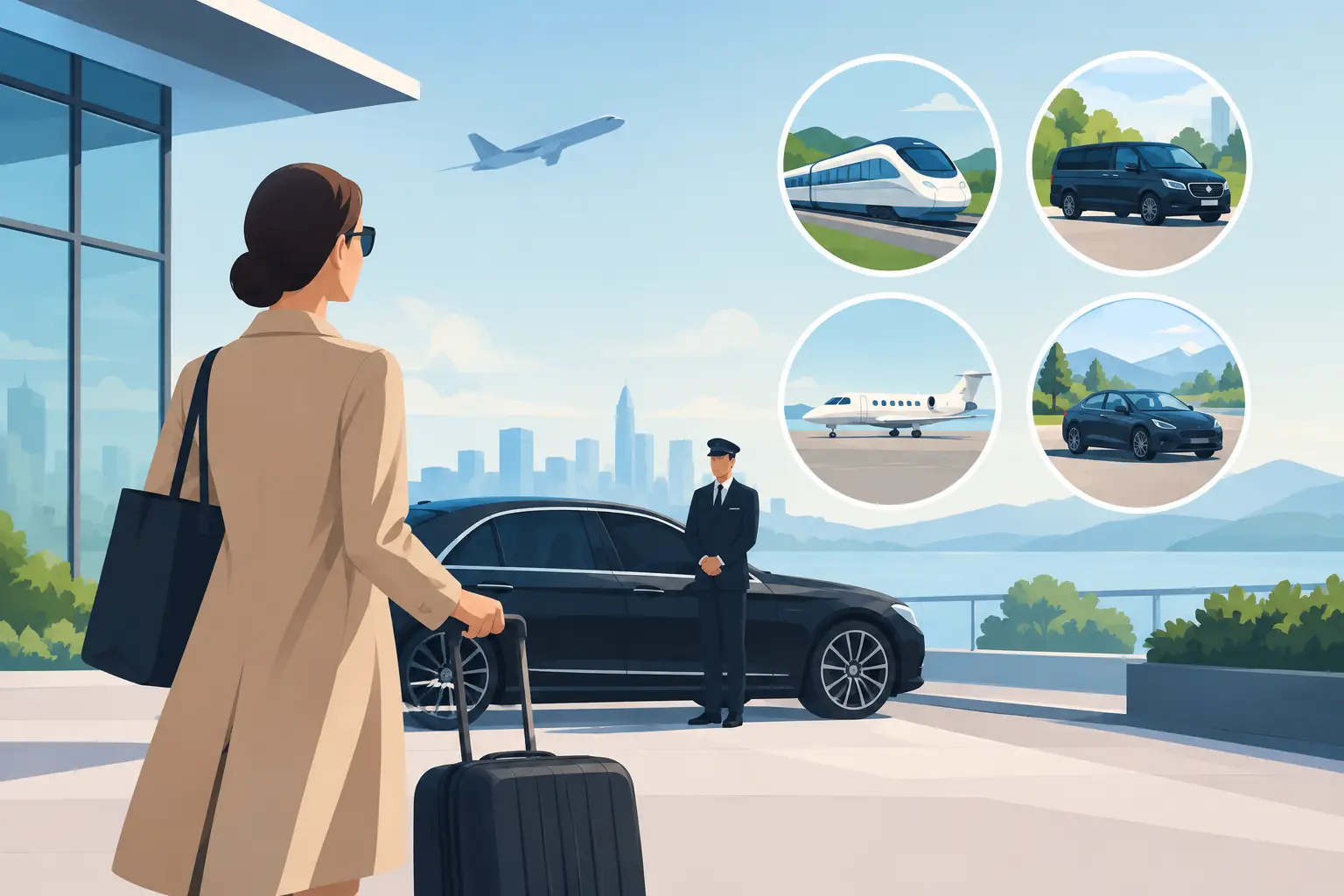
A delayed flight, a client waiting at the hotel, or a wedding party on a fixed timeline can make transportation feel far more consequential than a simple trip across town. Chauffeur alternatives can work well in the right setting, but the best choice depends on what is at stake: your time, privacy, presentation, comfort, or the reliability of an entire itinerary.
For a quick ride with no special requirements, convenience may be the deciding factor. For executive travel, milestone events, airport transfers, or transportation involving guests, the decision deserves a closer look. The real question is not whether one option is universally better. It is whether the service level matches the occasion.
The Main Chauffeur Alternatives
Most travelers compare private chauffeur service with rideshare apps, taxis, rental cars, public transportation, or driving themselves. Each option has a place. The differences become clearer when you look beyond the initial fare and consider timing, vehicle quality, local knowledge, waiting time, and who is responsible when plans change.
Rideshare services
Rideshare is often the first option people consider for an unplanned trip. It is readily available in many areas, easy to request from a phone, and can be practical for a short solo ride when timing is flexible. For casual transportation, that convenience is hard to dispute.
The trade-off is consistency. Vehicle condition, driver experience, pickup timing, and luggage capacity can vary from one ride to the next. Surge pricing may also change the cost significantly during major events, weather disruptions, rush hour, or late-night travel. A rideshare driver is generally accepting a trip in real time, rather than preparing for a specific client, flight, route, or occasion.
This can matter when an executive needs a quiet, polished arrival, when a family is traveling with multiple bags, or when an event planner must coordinate several pickups. If a trip can absorb a few variables, rideshare may be enough. If it cannot, a reserved black car service offers a different level of control.
Traditional taxis
Taxis remain useful, particularly at airport taxi stands, city centers, and locations where immediate transportation is needed. They can be a sensible solution when a traveler has just landed and has not made prior arrangements. In some markets, they may also offer more predictable availability than rideshare during peak demand.
Still, taxis are typically designed for point-to-point transportation rather than a personalized itinerary. The experience may not include advance flight monitoring, meet-and-greet coordination, a preferred vehicle type, or dedicated support for a changing schedule. For a simple trip, those details may not matter. For a high-visibility guest or time-sensitive business traveler, they often do.
Rental cars
A rental car gives travelers independence. It can be a good fit for a multi-day trip with frequent stops, especially when the traveler is comfortable driving in an unfamiliar area. It also provides access to a vehicle without relying on local availability for every ride.
Independence comes with responsibility. The traveler must navigate traffic, find parking, manage fueling or charging, understand local road conditions, and remain focused after a long flight or full workday. In Denver, Colorado Springs, and across the Front Range, weather and mountain traffic can add another layer of consideration.
A rental car is often practical for a self-directed vacation or extended regional stay. It is less appealing when the passenger needs to prepare for a meeting, host clients, enjoy a celebration, or arrive rested rather than responsible for the road.
Public transportation
Rail, buses, and airport transit can be efficient and cost-conscious, particularly for an individual traveling light along a direct route. Public transportation also makes sense when parking is limited or when a traveler has time to spare.
Its limitations are usually about flexibility and privacy. Schedules, transfers, weather exposure, luggage handling, and crowded vehicles can make public transit difficult for airport arrivals, formal events, corporate groups, or passengers with mobility considerations. It is rarely the preferred choice for someone traveling with presentation materials, evening attire, children, or a schedule that leaves little room for delay.
Driving yourself
Driving yourself can appear to be the simplest option, especially when your own vehicle is available. Yet the full cost is not always obvious. Airport parking, mileage, wear on the vehicle, fuel, the return trip, and the time spent behind the wheel all add up.
For an evening out, a wedding, or an important meeting, self-driving also means someone in the group is managing traffic and parking instead of being fully present. For some occasions, that is perfectly acceptable. For others, the freedom to step out at the door, collect your belongings, and let someone else handle the logistics is part of the value.
When Chauffeur Alternatives Are the Better Choice
There is no reason to reserve premium transportation for every trip. A rideshare or taxi can be a smart choice for a short, spontaneous ride. Public transit can serve a direct route well. A rental car can suit a traveler who genuinely wants the flexibility to explore.
These options are usually strongest when the trip is low stakes. There is no strict pickup window, no client to host, no formal arrival, no substantial luggage, and no need for a particular level of privacy or comfort. The traveler can tolerate variability because the consequences of a late pickup or unsuitable vehicle are limited.
The decision changes when transportation is part of the experience. A vehicle is not merely getting someone from point A to point B when it is carrying a corporate guest, a wedding party, a prom group, an elderly family member, or a public-facing executive. It becomes an extension of the host’s standards and the passenger’s comfort.
Where a Private Chauffeur Service Earns Its Place
Private chauffeur service is built around preparation. The vehicle, chauffeur, route, pickup instructions, passenger preferences, and timing are arranged before the trip begins. That preparation is what separates a reservation-driven service from an on-demand ride.
For airport transportation, this can mean a chauffeur who is scheduled around the itinerary and ready to assist with luggage. For business travel, it means a quiet, professional environment where passengers can review notes, make calls, or simply reset between appointments. For weddings and special events, it provides a coordinated plan that keeps the day moving without placing transportation duties on family members or the wedding party.
Privacy is another meaningful distinction. An executive, entertainer, legal professional, or high-profile guest may need more than a ride. They may need discretion, careful communication, and a service team that understands the importance of understated professionalism. A vetted chauffeur and properly maintained luxury vehicle provide confidence that is difficult to duplicate through a purely transactional option.
At DA Executive Service, that level of care is designed around the individual trip. Whether the need is a single airport transfer, recurring corporate transportation, a wedding itinerary, or transportation for an important guest, the focus is on punctuality, comfort, and a stress-free experience from door to door.
How to Choose the Right Option for Your Trip
Start with the schedule. If a pickup must happen at a specific time, if a flight arrival needs monitoring, or if multiple stops must stay coordinated, a reservation-based service offers the strongest foundation. If the trip is flexible and the traveler can wait, an on-demand option may be sufficient.
Next, consider the passengers. A solo traveler with a backpack has very different needs from a family with luggage, a group of executives, or a bride in formal attire. Vehicle space, entry and exit, professional assistance, and the ability to travel together all affect the right choice.
Then consider the purpose of the ride. A casual dinner may call for convenience. A client dinner, investor meeting, airport pickup for a senior leader, or milestone celebration calls for more care. The transportation choice communicates something before anyone says a word.
Finally, consider the true cost of uncertainty. A lower upfront price can be worthwhile when a delay has little impact. When a missed reservation, poor arrival experience, parking complication, or last-minute cancellation creates stress for everyone involved, dependable service becomes a practical investment rather than an indulgence.
The best transportation decision should leave you free to focus on why you are traveling in the first place. When the occasion calls for more than a ride, choose the option that lets you arrive composed, on time, and fully present.