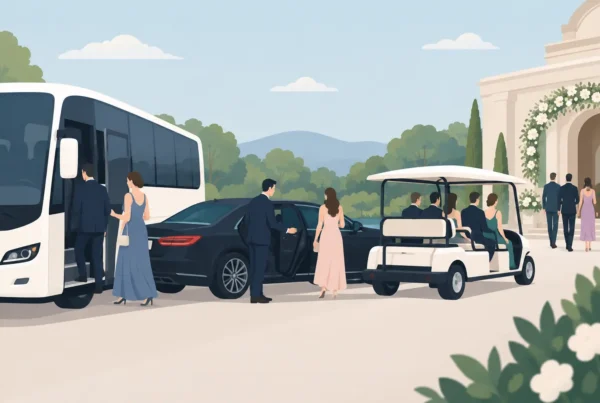
The first late pickup can change the feeling of an entire wedding day. A photographer loses light, a ceremony starts with empty seats, and a couple that should be enjoying a quiet moment together is answering calls about where everyone is. A thoughtful wedding transportation timeline example prevents those avoidable pressures by giving every important ride a clear purpose, pickup window, and backup plan.
For a wedding, transportation is more than getting from one address to another. It is part of the guest experience, a safeguard for the schedule, and an opportunity to give your wedding party a calm, polished start to the celebration. The right plan leaves room for traffic, photos, boarding, and the little delays that naturally happen when people are getting ready.
Start With the Moments That Cannot Move
Before choosing vehicle types or finalizing pickup times, identify the fixed points of the day. Your ceremony start time, venue access time, photography schedule, reception entrance, and venue departure deadline should drive every transportation decision.
Then work backward. If the ceremony begins at 4:30 p.m., guests should not be arriving at 4:30 p.m. Plan for the first guest shuttle to arrive 30 to 40 minutes beforehand. If your wedding party needs to be photographed at the venue by 3:45 p.m., their vehicle should arrive early enough for a composed exit, loading dresses or personal items, and a buffer for road conditions.
This is particularly important in Colorado. Denver traffic can change quickly around major corridors, and mountain or foothill venues may require additional time for winding roads, weather, and limited access points. A schedule that looks efficient on paper can become too tight once real-world conditions are involved.
A Wedding Transportation Timeline Example
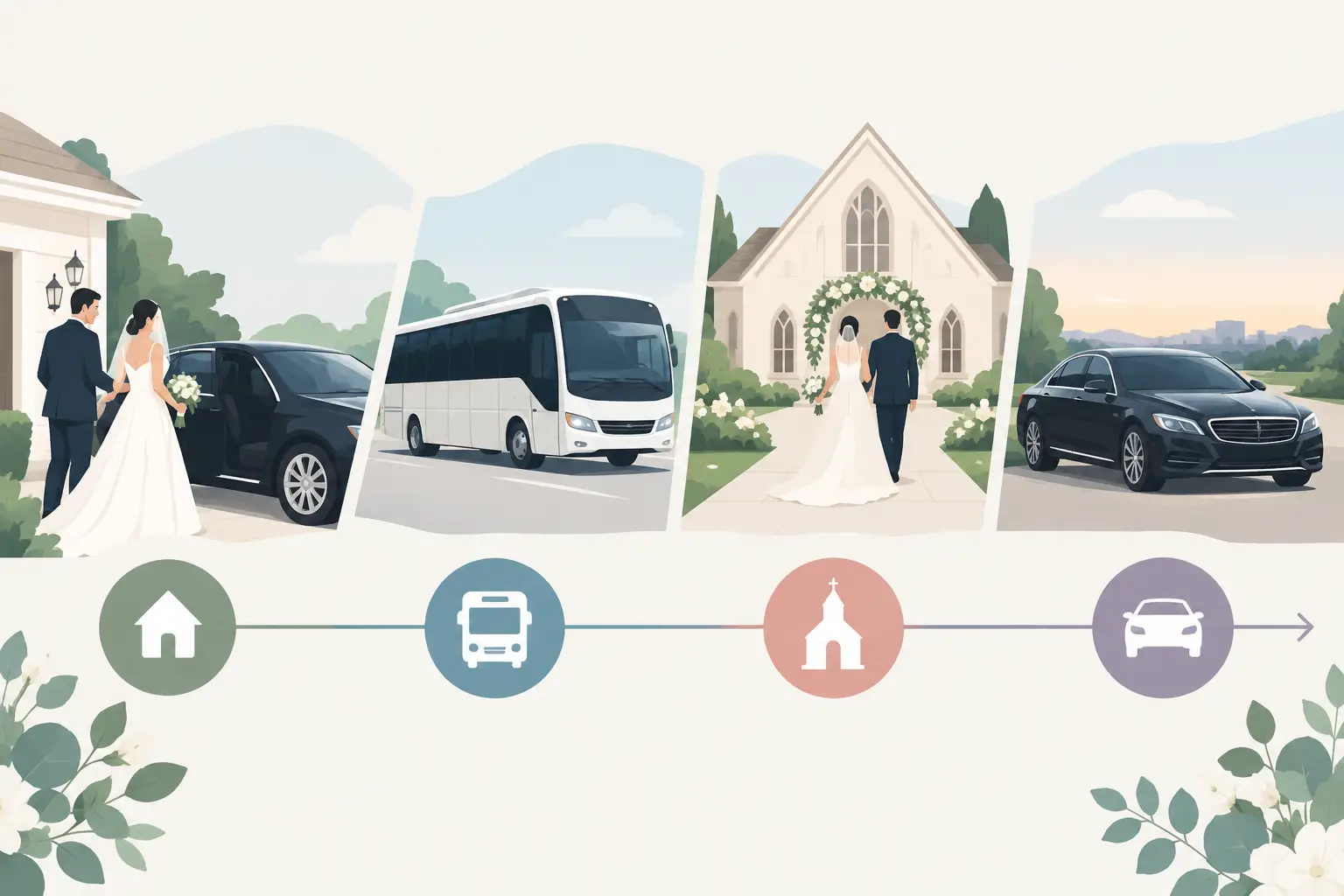
The sample below is designed for a 4:30 p.m. ceremony, a 5:15 p.m. cocktail hour, and a 10:30 p.m. reception exit. The couple and wedding party are preparing at separate hotels, the ceremony and reception take place at the same venue, and guests are staying at one nearby hotel.
11:30 a.m. – Couple’s private transportation arrives
A private luxury sedan or SUV arrives for a first-look location, hair appointment, or any pre-ceremony appointment away from the hotel. Not every wedding needs this ride, but it is valuable when the couple is moving separately and wants privacy before the day begins.
This is also a smart place to build in discretion. The driver can confirm the preferred entrance, assist with bags or garment items, and keep the vehicle ready without adding unnecessary activity around the couple.
1:45 p.m. – Wedding party vehicles arrive at hotels
Separate vehicles arrive for each side of the wedding party, or one larger vehicle arrives if everyone is preparing together. Although the actual drive to the venue may only take 20 minutes, plan at least 10 to 15 minutes for boarding. Formalwear, bouquets, garment bags, phone chargers, and last-minute personal items all take time to organize.
For larger parties, a luxury sprinter or mini coach may be more practical than multiple SUVs. For a smaller group, executive SUVs provide a more intimate experience. The best choice depends on headcount, dress volume, venue access, and whether the party will travel together after photos.
2:15 p.m. – Wedding party departs for photos
The wedding party leaves with enough time to arrive, settle in, and begin photos by 2:45 p.m. This earlier departure creates breathing room if someone needs to return to the hotel for an overlooked item or if traffic slows near the venue.
A professional chauffeur should already know the intended drop-off point and coordinate with the planner or venue contact when access is restricted. The goal is simple: no one should be circling the property while the photographer waits.
3:20 p.m. – Family transportation arrives
Transportation for immediate family, grandparents, and VIP guests arrives at their hotel or home. This group often benefits most from dedicated service. They may need extra boarding time, assistance entering and exiting the vehicle, or a quieter ride separate from the energy of the wedding party.
Have this group arrive by 4:00 p.m. They can be seated, greeted, and relaxed before guests begin entering the ceremony space. If family photos are scheduled before the ceremony, move this pickup earlier accordingly.
3:45 p.m. – First guest shuttle departs
The first guest shuttle departs from the designated hotel pickup point. This departure is ideal for guests who prefer to arrive early, including older relatives and anyone who wants time to find their seat. Clear signage and a host at the hotel entrance can make this process far easier, especially when several events are taking place nearby.
4:05 p.m. – Second guest shuttle departs
A second departure captures most guests and should arrive no later than 4:25 p.m. If the hotel is more than 20 minutes from the venue, adjust both departures earlier. Do not schedule the final shuttle to arrive exactly at ceremony time. Even a short line at the venue entrance can affect the start.
For a small guest count, one round-trip vehicle may be sufficient. For a larger wedding, two vehicles or staggered service avoids overcrowding and keeps departures dignified rather than rushed.
5:15 p.m. – Transportation remains on standby or repositions
Once the ceremony begins, decide whether wedding party vehicles will remain nearby, return for a later pickup, or reposition to the reception entrance. If the reception is at a separate venue, this is the critical transition of the day. Guests should have a clear instruction before leaving the ceremony, while family and the wedding party may need their own dedicated departure times.
If ceremony and reception share one property, standby service can still be helpful for a couple’s portrait departure, an early exit for a family member, or an unexpected need. It is not always necessary, but it offers reassurance when timing is tight or the venue is remote.
9:45 p.m. – Guest return shuttles begin
Early shuttle departures are considerate for guests who do not plan to stay through the final send-off. A 9:45 p.m. departure and a final 10:45 or 11:00 p.m. departure work well for many receptions. Announce the final shuttle time during the reception and display it near the exit so no one is left guessing.
If alcohol is being served, reliable return transportation is also an act of care. Guests can celebrate fully without appointing drivers, navigating unfamiliar roads, or waiting for a last-minute rideshare in formal attire.
10:30 p.m. – Couple’s getaway vehicle is ready
The couple’s departure vehicle should be positioned discreetly before the send-off begins. The chauffeur can coordinate with the planner, photographer, and venue team so the vehicle is ready when the couple is ready, not several minutes later. A quiet luxury SUV or sedan is often ideal for this final ride, with room for an overnight bag, florals, and a change of shoes.
Build Buffers Where They Matter Most
A timeline should be precise, but it should not be brittle. Add extra time to hotel pickups, venue entrances, mountain routes, and every transfer involving a large group. Ten minutes of planned margin can protect an hour of photography, prevent a delayed ceremony, or spare the couple from managing logistics in wedding attire.
Avoid stacking pickups too closely when the same vehicle is serving multiple groups. A vehicle cannot be in two places at once, and a schedule that assumes perfect traffic and instant boarding creates unnecessary risk. A transportation professional can help determine whether a second vehicle or a longer service window is the more sensible investment.
Give Every Guest One Clear Instruction
Even an excellent transportation plan can fail if guests do not know where to be. Include the hotel pickup location, departure times, and return schedule on your wedding website, welcome card, or itinerary. Use plain language. “Shuttle departs the north hotel entrance at 4:05 p.m.” is better than “Transportation available before the ceremony.”
Designate one point of contact other than the couple to handle day-of questions. This may be a planner, a trusted family member, or a transportation coordinator. That person can communicate changes while the couple stays present for the moments they planned so carefully.
DA Executive Service can tailor wedding transportation around your venue, guest count, and personal schedule, with vetted chauffeurs and a modern fleet prepared for a stress-free experience. When every ride has a purpose and every pickup has room to breathe, you can sit back, relax, and let the day feel as special as it should.