
A corporate itinerary can be flawless on paper and still unravel at the curb. One late vehicle, too little luggage room, or a split group arriving at different times can affect a client meeting, conference opening, or executive dinner. The best vehicles for corporate groups are the ones that match the size, purpose, and pace of the day while giving every passenger a composed, comfortable arrival.
For corporate travel, the decision is about more than passenger count. It is about protecting time, presenting the right image, and making the ride itself feel organized. From a two-person airport transfer to transportation for a full conference delegation, the right vehicle turns a complicated schedule into a stress-free experience.
What Corporate Group Transportation Must Deliver
A luxury vehicle should support the business objective behind the trip. A visiting executive may need quiet, privacy, and room to prepare for a meeting. A sales team heading to a convention may need coordinated pickup times and enough capacity for display materials. A client group may value a polished arrival as much as the destination itself.
That is why capacity alone can be misleading. A vehicle that technically seats six may not be the right choice for six adults carrying roller bags after a flight. Likewise, placing a senior executive and several colleagues in separate rides may be practical, but it can create unnecessary delays and dilute the guest experience.
The best arrangement considers four details together: the number of passengers, luggage volume, desired level of privacy, and the itinerary’s timing. A professional transportation partner can also account for factors that are easy to overlook, such as multiple pickup locations, hotel loading areas, mountain-weather conditions, or a meeting that runs longer than planned.
Best Vehicles for Corporate Groups by Size
Executive sedans for one to three passengers
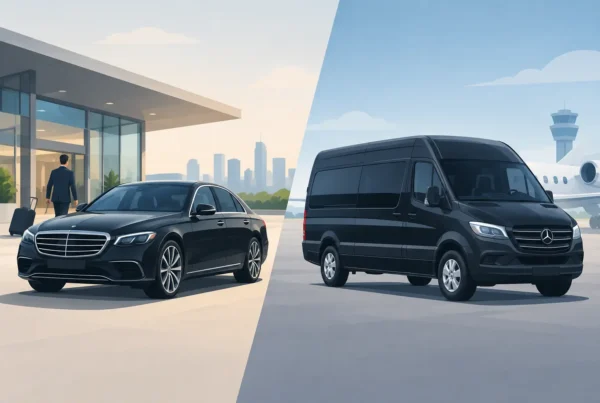
For solo executives, couples, or small leadership teams, an executive sedan remains a refined choice. It offers a quiet cabin, a discreet profile, and an arrival that feels appropriately polished for airport transfers, private dinners, and high-stakes meetings.
Sedans work especially well when passengers are traveling light and value personal space. They are also ideal for an executive who needs uninterrupted time between Denver International Airport and an office, hotel, or residence. The trade-off is simple: luggage capacity and passenger seating are limited. Once three adults have full-size bags, an SUV often makes more sense.
Luxury SUVs for small teams and VIP guests
Luxury SUVs are among the most versatile vehicles in corporate transportation. They provide a commanding presence, additional luggage space, and comfortable seating for small groups without feeling oversized. For visiting clients, board members, and executive teams, an SUV offers an elevated experience while remaining practical for airport travel and multi-stop schedules.
An SUV is often the better choice when winter weather, golf equipment, presentation cases, or several pieces of luggage are part of the plan. It also suits executives who appreciate an easier entry and exit than a lower sedan provides. For groups of four to six adults, confirm how much luggage each person will carry before finalizing the reservation. Comfort should not be compromised just to fit everyone into one vehicle.
Executive vans for productive team travel
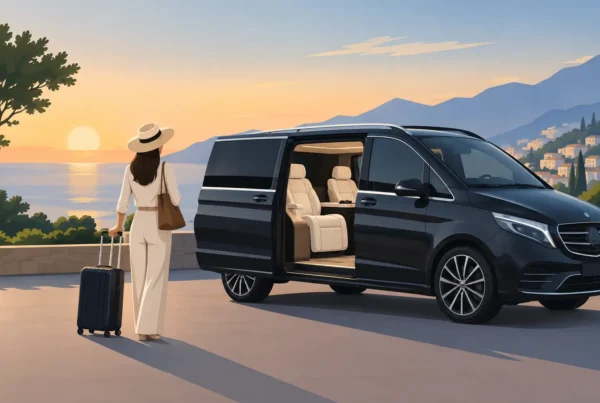
When a team needs to move together, an executive van can be the most sensible and polished solution. These vehicles are designed for groups that need space without the formality or scale of a motor coach. They are well suited to airport arrivals, off-site meetings, campus visits, convention transportation, and employee appreciation events.
Keeping a group in one vehicle has clear advantages. Everyone arrives together, itinerary changes are communicated once, and no one is left coordinating multiple rideshares or searching for a driver in a crowded pickup area. The shared ride can also provide a valuable moment for colleagues to review the day, welcome guests, or simply relax before the next commitment.
The main consideration is the group’s expectations. An executive van is ideal for collaborative team movement, but individual VIPs may prefer the additional privacy of a dedicated sedan or SUV. For a mixed group, a combination of vehicles is often the strongest plan.
Mini coaches and motor coaches for larger delegations
For corporate groups attending conferences, company gatherings, sporting events, or large-scale meetings, mini coaches and motor coaches provide order at scale. Rather than managing a long line of separate vehicles, organizers can move a larger delegation under one coordinated plan.
This option is particularly valuable when precise timing matters. A coach can be scheduled for a single hotel departure, a controlled venue arrival, and a designated return pickup. It reduces parking challenges, keeps attendees together, and gives event planners greater visibility into who has arrived.
A mini coach is generally appropriate for mid-sized groups, while a motor coach is better for larger delegations. The right choice depends on the final passenger count, luggage needs, route, and venue access. Some downtown properties and private event spaces have limited loading zones, so transportation should be planned around the location rather than booked as an afterthought.
When a Mixed Fleet Is the Better Choice
Not every corporate group should travel in the same type of vehicle. In fact, a mixed fleet is often the most thoughtful option for conferences, leadership summits, and client-facing events.
Consider a company hosting out-of-town leadership and a broader employee group. Dedicated executive SUVs can collect senior leaders and key clients from the airport, while an executive van or coach transports the remaining attendees between the hotel and event venue. Each traveler receives service appropriate to the occasion, and the organizer retains one coordinated transportation plan.
This approach also works well when flights arrive at different times. Instead of making an early-arriving executive wait for a larger group, a private sedan or SUV can provide immediate door-to-door service. The larger vehicle can then operate on a fixed schedule for the main delegation.
Questions to Ask Before Selecting a Vehicle
The most successful reservations begin with a complete picture of the day. Share the confirmed passenger count, but also explain who is traveling. Are they executives, clients, employees, or a combination? Will they carry checked luggage, trade-show materials, or personal bags? Are there multiple arrivals, stops, or return times?
It also helps to consider the tone of the event. A board dinner calls for discretion and individual attention. A convention shuttle requires consistency and clear logistics. A corporate celebration may call for room to socialize and a comfortable ride home at the end of the evening.
For Colorado travel, route conditions deserve attention as well. A Denver airport transfer during winter, a Colorado Springs meeting schedule, or a Front Range itinerary with several stops may require extra flexibility. A modern, well-maintained vehicle and an experienced chauffeur provide reassurance when schedules are tight and conditions change.
Service Matters as Much as the Vehicle
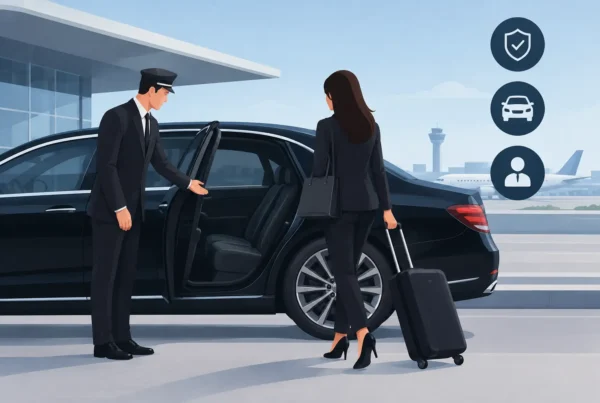
Even the right vehicle cannot compensate for poor coordination. Corporate travelers need a chauffeur who arrives early, understands the itinerary, handles luggage with care, and respects the privacy of every passenger. They need clean, modern vehicles and communication that feels calm rather than hurried.
At DA Executive Service, corporate transportation is planned around the traveler, not just the route. Vetted chauffeurs, concierge-style coordination, and tailored service help teams move through Denver, Colorado Springs, and the Front Range with confidence. For travel beyond Colorado, an affiliate network can extend that same level of care to other destinations.
The right corporate vehicle gives your guests more than a seat. It gives them a calm, prepared start to the business ahead – and lets your team focus on the meeting, relationship, or event that brought them there.