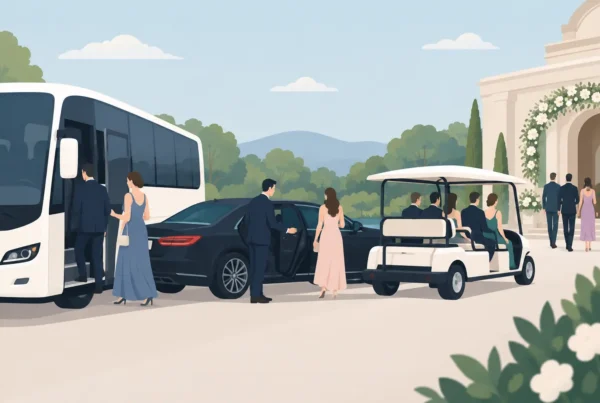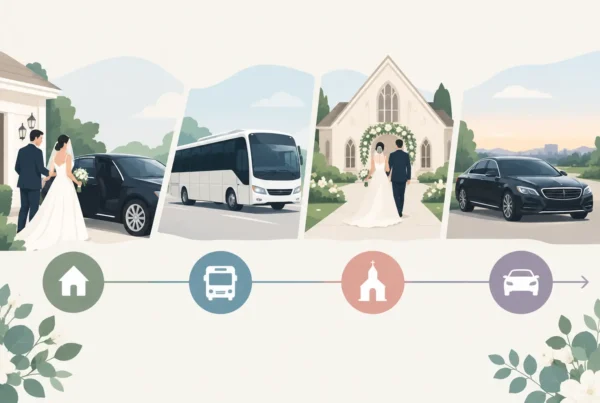

A late guest can delay photos. A guest who has had champagne should never have to drive. And a group unfamiliar with a mountain venue or downtown parking should not spend cocktail hour circling the block. This wedding guest transport guide is designed to help couples create an arrival and departure plan that feels gracious, polished, and genuinely stress-free.
Guest transportation is not necessary for every wedding. It is, however, one of the most thoughtful decisions you can make when timing, distance, weather, alcohol service, or an unfamiliar destination could complicate the day. Done well, it protects the schedule while giving loved ones a comfortable, elevated experience from the moment they leave their hotel.
Start With the Guest Experience
Before choosing vehicles or setting routes, consider the day from your guests’ point of view. Where will they be before the ceremony? How easily can they reach the venue? Will they know where to park, walk, or meet the shuttle? Most importantly, how will they get home safely once the celebration ends?
Transportation is especially valuable for destination weddings, hotel-heavy guest lists, mountain venues, private estates, and receptions where parking is limited. In Colorado, changing weather and travel times can also make a carefully planned chauffeur service feel less like an extra and more like essential hospitality.
A transportation plan does not need to move every person at every moment. Often, the best approach is to identify the guests who benefit most: family members, the wedding party, out-of-town visitors, older relatives, and anyone staying at a designated hotel. This focuses the investment where it creates the most comfort and avoids paying for empty seats.
Wedding Guest Transport Guide: Build the Right Schedule
The most common mistake in wedding transportation is scheduling around the ceremony start time alone. A professional plan accounts for loading, traffic, venue access, guest check-in, and the fact that people rarely board a vehicle at the exact minute requested.
Begin by working backward from the ceremony. If guests should be seated by 4:45 p.m. for a 5:00 p.m. start, plan their arrival earlier than 4:45. Then add the travel time from the hotel, plus a practical buffer for loading and local traffic. For a destination or mountain route, the buffer should be more generous than it would be for a short city transfer.
For most weddings, two departure windows work better than one. An earlier vehicle gives organized guests, family, and anyone who prefers extra time the opportunity to arrive comfortably. A second departure accommodates those finishing hair and makeup, helping with final details, or simply moving at a different pace. This also reduces the pressure of trying to load every guest at once.
The return plan deserves equal attention. If the reception has a formal exit, schedule a vehicle shortly after it. If the event ends gradually, offer staged departures. One departure may suit guests leaving early, while another can serve those staying through the final dance. For a group that includes older relatives or families with young children, an earlier return option is a considerate touch.
Set a Clear Transportation Window
Your reservation should reflect the full service window, not just the driving time. A vehicle that arrives early, waits as needed, and departs on your schedule gives the day room to breathe. This matters when a ceremony runs long, a photographer requests ten more minutes, or weather affects boarding.
Ask the transportation provider how waiting time, additional stops, and schedule extensions are handled. Premium service is built around flexibility, but clear expectations protect both your timeline and your budget.
Choose Vehicles Based on the Route, Not Just the Headcount
A large vehicle is not automatically the best solution. The right fleet mix depends on the number of guests, luggage needs, roads leading to the venue, and the experience you want to provide.
A luxury SUV or executive sedan may be ideal for the couple, parents, VIPs, or a small group that needs privacy and a direct door-to-door transfer. Sprinter-style vehicles offer a refined option for wedding parties and medium-sized groups. For larger guest counts, minibuses or motor coaches can make sense, provided the venue entrance, roads, and turnaround areas can accommodate them.
Consider the practical details before confirming capacity. Will guests be wearing formal attire that takes up more room? Are they carrying wraps, umbrellas, welcome bags, or overnight luggage? Is the venue accessed by a narrow drive or a steep mountain road? A slightly smaller vehicle with multiple coordinated trips may be more appropriate than one oversized vehicle that cannot easily reach the entrance.
For couples who value an especially polished experience, use a combination of vehicles. A private black car for the couple and immediate family paired with a group vehicle for guests can create a personal, well-organized flow without treating every transfer the same.
Make Instructions Impossible to Miss
Even an excellent transportation plan can unravel if guests do not know where to be. Share the transportation details in more than one place: your wedding website, welcome itinerary, hotel welcome bag, and a day-of message. Keep the language simple and specific.
Guests need the pickup address, the exact meeting point, departure times, expected return times, and a clear note about whether seats must be reserved. If the hotel has several entrances, specify which entrance to use. If the vehicle will have a sign, describe it. If guests should call or text a designated coordinator with questions, provide that information before the day rather than relying on the couple to troubleshoot during photos.
It also helps to explain the reason for the service. A brief note such as, “Transportation is provided so everyone can enjoy the evening and return safely,” sets the right expectation. Guests are more likely to use the service when they understand that it is both a convenience and a thoughtful safety measure.
Assign One Point Person
Your planner, venue coordinator, or a trusted member of the wedding party should be the transportation contact for the day. This person can confirm that guests are boarding, communicate any last-minute timing changes, and make decisions without interrupting the couple.
A professional chauffeur team should coordinate closely with that contact. At DA Executive Service, this concierge-minded communication is part of creating a calm, tailored experience rather than leaving logistics to chance.
Plan for the Moments That Usually Cause Delays
Transportation works best when it anticipates the predictable friction points. The end of the reception is one of them. Guests may be looking for coats, saying goodbye, or waiting for friends. Build a little extra time into departure windows, and avoid telling a full vehicle to leave at a time when half the group is still inside.
Weather is another factor. For an outdoor wedding, decide in advance where guests will wait if it rains or temperatures drop. Confirm whether vehicles can stage close to the entrance and whether the venue has a covered loading area. In winter, allow additional time for road conditions and remind guests to bring appropriate outerwear.
Alcohol service requires thoughtful judgment as well. A shuttle or chauffeured vehicle does not remove the need for responsible hosts, but it gives guests an appealing alternative to driving. If transportation is limited to certain hotels, communicate that early so guests can choose accommodations accordingly.
Finally, plan for accessibility. Ask guests privately if anyone requires additional assistance, and discuss mobility needs with your transportation provider well before the wedding weekend. A comfortable, dignified arrival matters to every guest.
Know When Private Chauffeur Service Is the Better Choice
Rideshare apps can be useful for a casual night out, but they are not designed to manage a wedding timeline. Surge pricing, unfamiliar drivers, inconsistent vehicle quality, and unreliable availability can create unnecessary stress when guests need to arrive together or depart safely at a specific time.
Reserved chauffeur service offers greater control. You know the vehicle standard, the service window, and who is responsible for the trip. Vetted chauffeurs also bring the professionalism that formal occasions require, particularly when transporting executives, elderly family members, high-profile guests, or the wedding party.
The right level of service depends on your guest count and priorities. A simple hotel-to-venue shuttle may be all you need. For a black-tie celebration, a more personalized door-to-door plan can be worth the investment. The deciding question is not whether transportation looks luxurious. It is whether it makes the day easier, safer, and more welcoming for the people you have invited.
When your guests can sit back, relax, and enjoy the celebration without watching the clock, searching for parking, or planning a late-night drive, the care behind your wedding is felt long before the first toast.